

The OCD Lab: Perinatal OCD Intensives
Fast, Focused Treatment for New & Expecting Moms
The OCD Lab:
The Self-Trust Framework
Serving Maryland, Pennsylvania, South Carolina and Vermont
Has pregnancy or new motherhood become about anxiety? Intrusive thoughts about your baby's safety, constant checking, googling symptoms at 2am, or a fear that you can't shake that something bad will happen if you're not vigilant enough?
The Perinatal OCD Lab is a therapy intensive built specifically for pregnancy, postpartum, and beyond. With longer, more frequent sessions, this structured, accelerated program helps you break free from OCD's grip and get back to trusting yourself as a parent.
This isn't just about managing symptoms. It's about making this season of your life less about anxiety, and more about you and your baby.
Now booking for Summer 2026
•
Now booking for Summer 2026 •
What if you didn’t have to wait months to feel better? Now more than ever, you need flexibility to get back to what matters most.
Maybe you’re managing a newborn, pregnancy, an older kid, or some combination of them all. And yet, behind it all, OCD is stealing time, energy, and the ability to just be present.
Let’s change that.
The traditional 50-minute model is what we are used to, but that doesn’t always mean it’s the most effective. Now, more than ever, motivated clients are achieving expedited results with accelerated therapy.

The Self-Trust Framework©
a structured approach to OCD treatment, rooted in Inference-Based CBT (I-CBT) and infused with Acceptance and Commitment (ACT) principles, and shaped by integrative nutrition and insight from reproductive psychiatry, OB-GYN, and pediatric care.
OCD in the perinatal period is sneaky. It hides behind love, and disguises itself as vigilance. It convinces you that checking one more time is what a good mother does. But really, it's stealing your presence with your baby. The Self-Trust Framework teaches you why all the checking and making sure is not only unnecessary, it’s unhelpful.
OCD makes you doubt everything: your thoughts, your senses, your memories, whether you're a good mother. The Self-Trust Framework helps you rebuild trust in your instincts, your choices, and your capacity to parent the way you actually want to.

There is a real care gap.
Most therapists fall on one side of a gap. Many perinatal mental health therapists understand this season of life deeply, but don't specialize in treating OCD. Many OCD specialists know the disorder inside and out, but lack real training in the perinatal period. This framework was built to close that gap: true perinatal expertise and true OCD expertise, in the same room, at the same time.
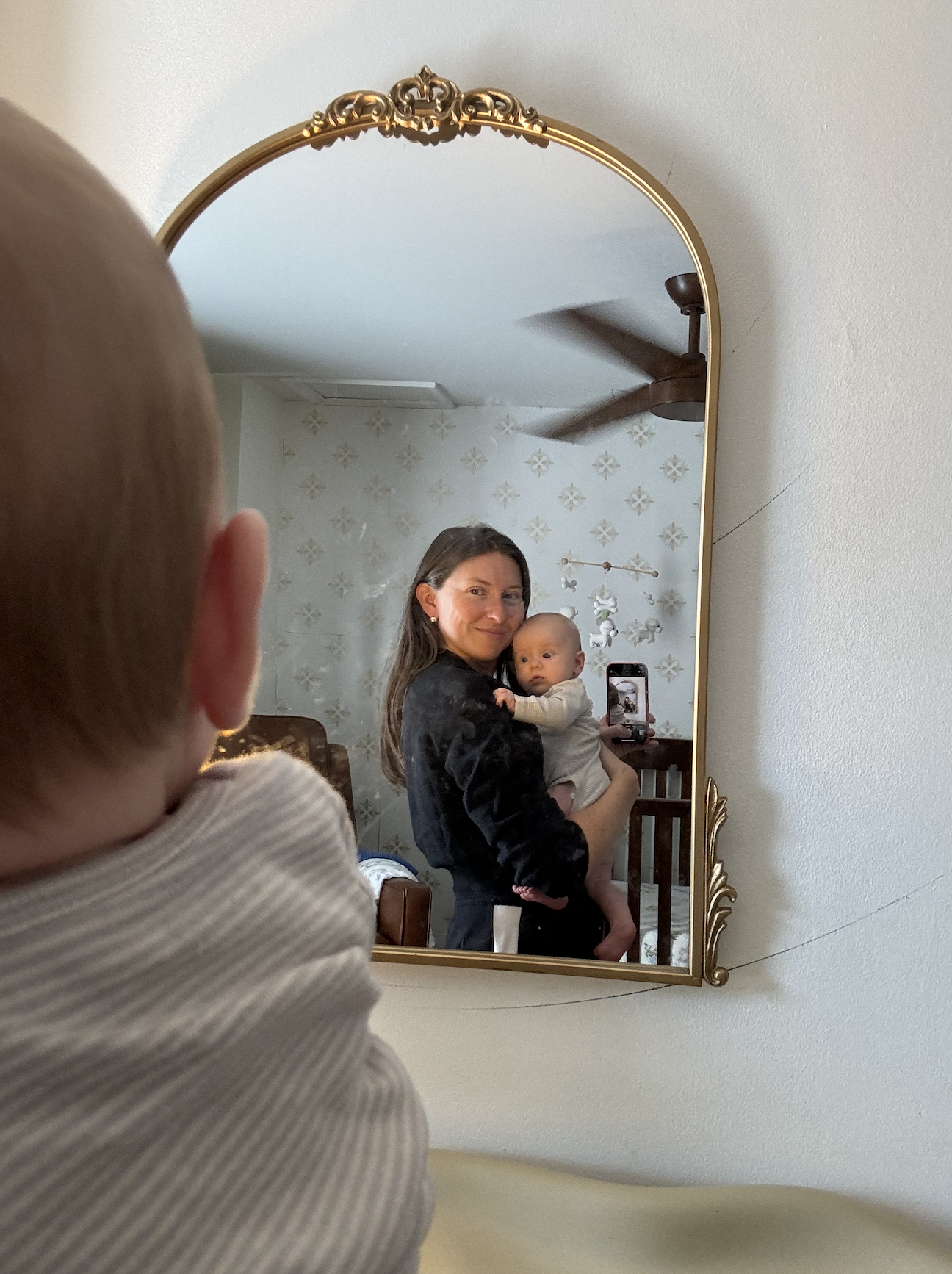
About your perinatal OCD expert
Hi, I’m Alex.
I created The OCD Lab because I saw a real gap in care. Emerging research confirms what many perinatal specialists have long suspected: perinatal OCD is far more common than most people realize, and still widely misunderstood and misrepresented, even within the medical and mental health community.
I’m passionate about bridging this gap, spreading awareness about perinatal OCD, and helping as many women as possible reclaim trust in themselves.
I’m an OCD specialist, perinatal mental health certified therapist, and mother of two. I get it.
Learn more about me and my credentials here.
What You’ll Get in The OCD Lab:
-
✺
A clear roadmap grounded in I-CBT, adapted for the specific ways OCD shows up in pregnancy and postpartum
-
✺
A personalized workbook containing worksheets and resources tailored to your postpartum or pregnancy experience
-
✺
Coordination with your OB-GYN or reproductive psychiatry provider, treating you as a whole person
-
✺
Frequent, high-touch sessions built for fast, focused progress
-
✺
Referrals to community resources and partnerships for medication management, lactation support, pelvic floor therapy, and more
-
✺
A 7-step guide to trusting yourself — and a focus on long-term self-trust as a mother, not just short-term symptom relief
You are not a danger to your baby.
If you’re here because you googled “intrusive thoughts about baby” then great, this is when Google is helpful!
Perinatal OCD involves unwanted, intrusive thoughts, images, or urges that cause significant distress (often, but not always, about harm coming to your baby, either accidentally or intentionally). These thoughts are ego-dystonic, meaning they go against your values and terrify you precisely because they're the opposite of what you want.
Having intrusive thoughts about harming your baby does NOT mean you want to harm your baby, or that you will. These thoughts show up because you care so deeply about your baby's safety. This is different from postpartum psychosis, which involves a loss of touch with reality and is rare. If you're unsure which you're experiencing, that's exactly what our consultation call is for- we'll help you figure out what's going on and what kind of support you need.
I-CBT for Perinatal OCD
We treat perinatal OCD with Inference-Based CBT (I-CBT), an evidence-based approach that addresses the reasoning behind the obsessions rather than offering short-term relief. (Link to general page for the full explanation of how I-CBT works.)
A Sneak Peek Into The Modules
-
Introduction of modality, inferential confusion, what are obsessions and compulsions, introduce OCD sequence
Take-Home: complete OCD sequence log
-
Review OCD sequence log, explore reasoning categoties and logic of OCD
Take-Home: Log logic of OCD examples
-
Review obsessional story and bridging practice, learn about the feared self, your personal rulebook
Tale-Home: explore feared self examples, your personal rulebook

-
Review feared self/personal rulebook examples, explore perception vs imagination, reasonable vs obsessional doubt, zooming in vs zooming out
Take Home: reasonable vs obsessional doubt examples
-
Review reasonable vs obsessional doubt, explore direct evidence, blending, dismantle positive beliefs about worry/compulsions
Take-Home: direct evidence exercise, examples of blending, introduce 7-step guide to trusting self
-
Values and Making Life Meaningful
Take-Home: exploratory values exercise


If you’re short on time but big on results, a therapy intensive might be right for you
-
Intensive-style therapy allows us to “cut to the chase” without losing time to check-ins, wrap ups, and other things that come up week to week. Longer sessions allow for more time developing skills and getting relief, quicker.
-
Therapy intensives can be a smart and strategic investment in your mental health. The quicker you see results, the less time (and money) you spend.
Using out-of-network benefits may be a great option, and therapy intensives allow you to reach your deductible faster!
-
Therapy intensives allow for more trouble-shooting and deeper support. You and I will work closely together for a few weeks, allowing me to answer questions or address issues in live time, without having to wait a week in between sessions.
Why choose a therapy intensive?The OCD Lab may be a good fit if:
❊ You’re motivated and ready to dive in
You’re the kind of person who wants to cut to the chase and get to the good stuff- I get it. While we can’t “rush the process”, intensives absolutely allow us to expedite it. If you’re someone who loves results and are finding yourself ready for a deep dive, let’s chat.
❊ You’re currently in therapy but not focused on anxiety or OCD
If anxiety, OCD, or intrusive thoughts are starting to hijack the progress you’ve made in therapy, an intensive can help. I’ll coordinate with your current therapist to offer a short-term, focused reset. No need to start from scratch or rehash your whole story, just the support you need, when you need it.
❊ You are pregnant or a new mom
The hormonal and societal shifts that take place during pregnancy and postpartum are no joke (trust me, I’ve been there) - and they often bring up anxiety, intrusive thoughts, or other changes. A therapy intensive offers a focused, accelerated path to help you quiet the noise, reconnect with your instincts, and rebuild self-trust.
❊ You’ve been in therapy before, but it didn’t help that much
Maybe you’ve done deep breathing, downloaded the apps, journaled your heart out…and you’re still stuck. The truth? Not all therapy is created equal. OCD and anxiety require evidence-based practice, and I’m passionate about this. Let’s stick to what really works.
How Perinatal OCD Shows Up
OCD often intensifies or first appears during major life transitions: trying to conceive, pregnancy, and postpartum. The high stakes, uncertainty, hormones, and responsibility of growing your family can trigger or worsen obsessions and compulsions. As PMH-C certified specialists, we understand how OCD presents differently across these seasons:
During Fertility Treatment Obsessive tracking and rituals around conception, intrusive thoughts about "deserving" to be a parent, hypervigilance about body symptoms, compulsive research and reassurance-seeking from doctors, magical thinking about what will make it work.
Postpartum Disturbing intrusive thoughts about the baby being harmed (the most common and misunderstood presentation), compulsive checking (Is the baby breathing? Is the temperature right? Did I feed them correctly?), excessive cleaning or contamination fears, inability to let others care for the baby, avoidance of being alone with the baby or certain objects, needing to confess every thought or action.
During Pregnancy Intrusive thoughts about harming the baby or losing the pregnancy, contamination fears or health anxiety about what you're eating, touching, or breathing, excessive checking or avoidance behaviors, hyperresponsibility about every decision, constant reassurance-seeking from doctors or partners.
In Motherhood Continued checking and reassurance-seeking as your kids grow, intrusive thoughts about harm or safety, hyperresponsibility about parenting decisions, difficulty trusting others with your children.
Our Services
-

OCD Track
Serving themes such as:
Relationship OCD, Contamination OCD, “Pure-O” OCD (mental compulsions), Harm OCD, Perfectionism/”Just Right” OCD, Religious OCD, Sexual OCD, Hit and Run OCD, checking compulsions, mental reviewing, reassurance-seeking and more
-

Perinatal OCD Track
For Pregnancy, Postpartum & Beyond
Themes such as fear of contamination, fear of causing harm to baby, perfectionism, fear of losing control, concerns regarding safety of baby, over-responsibility, checking behaviors, constant Googling and more

All killer, no filler
We take our crabcakes seriously in Maryland, and as you know, the best ones are filled with nothing but the good stuff. No filler, no fluff.
Therapy intensives allow for targeted, focused work on your mental health without the time cost of check-ins, updates, and other non-clinical topics.
Some of the things we treat…
❋ Fear of harming baby on purpose
❋ Fear of harming baby by accident
❋ Fear of losing control
❋ Checking (and re-checking)
❋ Reassurance-seeking
❋ Fear of contamination
❋ Religious OCD
❋ Hit and Run OCD
❋ Googling…everything
❋ Postpartum rage
❋ POCD (pedophilia OCD)
❋ Relationship OCD
❋ Scary, disturbing images
❋ Perfectionism
❋ “Pure-O” OCD (mental compulsions)
❋ Sexual OCD
…and more!
This is not an exhaustive list. While OCD intensives are designed for perinatal OCD, any type of obsession or compulsion can present during the perinatal period- it doesn’t have to be focused on the baby. Anything can be a compulsion.
By the end of The OCD Lab, you’ll:
✹ Have a concrete, skill-based plan to navigate thought and worry spirals
✹ Reclaim trust in your self and your senses
✹ Align your life with what truly matters
✹ Face fear without avoidance
✹ Learn how to “trust your gut” and connect with your instincts as a mother
✹ Have a framework you can apply time and time again to navigate future worries
✹ Step out of compulsions and mental loops
✹ Understand how OCD works, so you can respond differently instead of getting pulled in
Intensive Options & Investment
-

The Steady Stream
✓ 8 weeks
✓ 1 hour sessions, 2x a week
✓ 16 sessions
✓ 16 hours of accelerated therapy
✓ personalized workbook and assignments
✓ comprehensive intake and diagnostic interview
Investment: $4650
-

The Deep Dive
✓ 4 weeks
✓ 2 hour sessions, 2x a week
✓ 8 sessions
✓ 16 hours of accelerated therapy
✓ personalized workbook and assignments
✓ comprehensive intake and diagnostic interview
Investment: $4900
-

Choose Your Flow
1) Choose your session length
60 minute - 2 hour sessions
2) Choose your frequency
2-3 times weekly
✓ personalized workbook and assignments
✓ comprehensive intake and diagnostic interview
Contact for pricing
Plus, optional add-ons including:
-
Let’s bring your support team in to help them understand how to really support you.
-
The mind/body connection is a two-way street. We have the ability to add on a session providing psychoeducation about ways to utilze nutrition and lifestyle changes to best support your anxiety and OCD recovery.
-
We will have the option to continue with ongoing check-ins as needed, if you’d prefer

Are you a clinician wanting to refer a client for an intensive?
Frequently Asked Questions
-
An OCD intensive concentrates therapy into a shorter, more frequent timeframe than standard weekly sessions, allowing for accelerated, targeted care.
-
Absolutely. Many of our perinatal clients are also working with a prescriber or OB, and we're glad to coordinate care so everyone's on the same page. If you are interested in a referral, we have relationships with numerous providers in the community.
-
At this time, yes, and specifically for perinatal OCD. If postpartum anxiety or worry (and you are unsure about the OCD component) is more your experience, you can discuss this on your consultation call- it's possible an intensive is still a great fit.
-
Perinatal OCD intensives are NOT appropriate for:
Clients who want long-term, slower-paced work
Clients with active eating disorders, suicidality, or postpartum psychosis (we'll help you find the right level of care instead)
Clients who wish to explore multiple areas of mental health- this is what traditional therapy sessions are for
Clients who aren't able to commit to practice outside of session, given realistic newborn constraints- we can talk through what's doable together
-
First, we’ll start with a complimentary 20 minute consultation call so I can learn more. If all sounds good, we will complete a 90-minute intake session to clarify diagnosis and treatment areas to ensure a therapy intensive would be a good fit. At this point, we would choose to either move forward with an intensive, or I will provide recommendations or alternatives.
-
For OCD treatment I utilize I-CBT, an evidence-based treatment gaining popularity due to its effectiveness and long-lasting results. You can learn more about I-CBT here.
In my experience, OCD treatment works beautifully in a structured, fast-paced setting. Progress can be slowed by delays in between sessions and ‘outside’ issues taking up priority during sessions. If traditional OCD treatment hasn’t worked before, let’s chat more about what could be different.
-
While we are an out-of-network provider, I’ve had plenty of clients be reimbursed by their insurance company- but this varies. I recommend contacting your insurance company to learn more about your plan. Some tips for using OON benefits can be found here.
One benefit of intensives is that due to the fast-paced nature of treatment, you may be able to reach a deductible faster!
-
No! I-CBT is an appealing treatment option not only for its effectiveness, but also because there is no need for exposures. I have found exposures to be less effective for mental compulsions, especially during the perinatal period.
There is no need to “sit with the uncertainty” that you might harm your baby. Instead, we ground in trust in yourself and the certainty you already have!
-
Yes, absolutely- sessions are virtual, and babies (and their unpredictable schedules) are always welcome. While I would encourage your village to step in and allow some time just for you, I recognize this is not always feasible and completely understand.
-
The intensive format is what we recommend for perinatal OCD because it moves fast, which helps in a season that doesn't wait. That said, if an intensive isn't the right fit for your schedule or your symptoms right now, reach out and we'll talk through whether ongoing weekly therapy makes more sense for you instead.
-
A classic therapist answer: it depends! Clients may choose to step down to occasional check-ins, weekly therapy, a relapse-prevention plan you can use independently or with your general therapist, or a referral to ongoing weekly support if needed.
-
A $300 non-refundable deposit is due at the time of booking your intensive intake and the remaining portion is due on the first day of your intensive session.
What To Expect
-

1: Start with a phone call
I offer a complimentary 20 minute consult to answer any questions you may have and determine if we would be a good fit. If you choose to move forward, we will schedule our initial intake.
-

2: Complete paperwork & questionnaires
After our initial consultation call, I will send over paperwork to review during our intake session.
-

3: Intake Appointment
During your 90 minute intake session, we will review your paperwork, questionnaires and history. Based on this, we will either map out a schedule to move forward or I will provide alternative recommendations.
-

4: The Work
Finally, the fun stuff. This is where the work begins! You will receive your personalized workbook and we will complete our therapy appointments as previously discussed.
FAQs:
-
At this time, visits are being offered virtually through a secure video platform. Services are available to those residing in Maryland, Pennsylvania, South Carolina and Vermont.
-
Many insurance companies offer out-of-network benefits, and you may be able to be reimbursed for a portion of your session cost. I recommend contacting your insurance company to learn more.
One benefit of intensives is that due to the fast-paced nature of treatment, you may be able to reach a deductible faster!
-
At this time, yes. If you have other areas you’d like to address through intensive-style therapy, you may discuss this with one of our therapists during your consultation call. (Psst: if you struggle with anxiety and worry, it’s possible an OCD intensive may be a good fit!)
-
For OCD treatment I utilize I-CBT, an evidence-based treatment gaining popularity due to its effectiveness and long-lasting results. You can learn more about I-CBT here.
In my experience, OCD treatment works beautifully in a structured, fast-paced setting. Progress can be slowed by delays in between sessions and ‘outside’ issues taking up priority during sessions. If traditional OCD treatment hasn’t worked before, let’s chat more about what could be different.
-
No! I-CBT is an appealing treatment option not only for its effectiveness, but also because there is no need for exposures. Truth be told, I have found exposures to be less effective for mental compulsions , which almost all clients of mine experience.
-
First, we’ll start with a complimentary 20 minute consultation call so I can learn more. If all sounds good, we will complete a 90-minute intake session to clarify diagnosis and treatment areas to ensure a therapy intensive would be a good fit. At this point, we would choose to either move forward with an intensive, or I will provide recommendations or alternatives.
-
A $300 non-refundable deposit is due at the time of booking your intensive intake and the remaining portion is due on the first day of your intensive session.
-
OCD intensives are NOT appropriate for:
Clients who want long-term, slower paced work
Clients with active eating disorders or suicidality
Clients who aren’t able to commit to practice outside of session
Now booking for Spring 2026
•
Now booking for Spring 2026 •

Ready for a deep dive?
Whether you’re navigating high-functioning anxiety, postpartum intrusive thoughts, or longstanding OCD patterns, the Self-Trust Framework meets you with evidence-based care that respects your whole self.